Old English Sheepdog Grooming: A Manageable Shaggy Coat
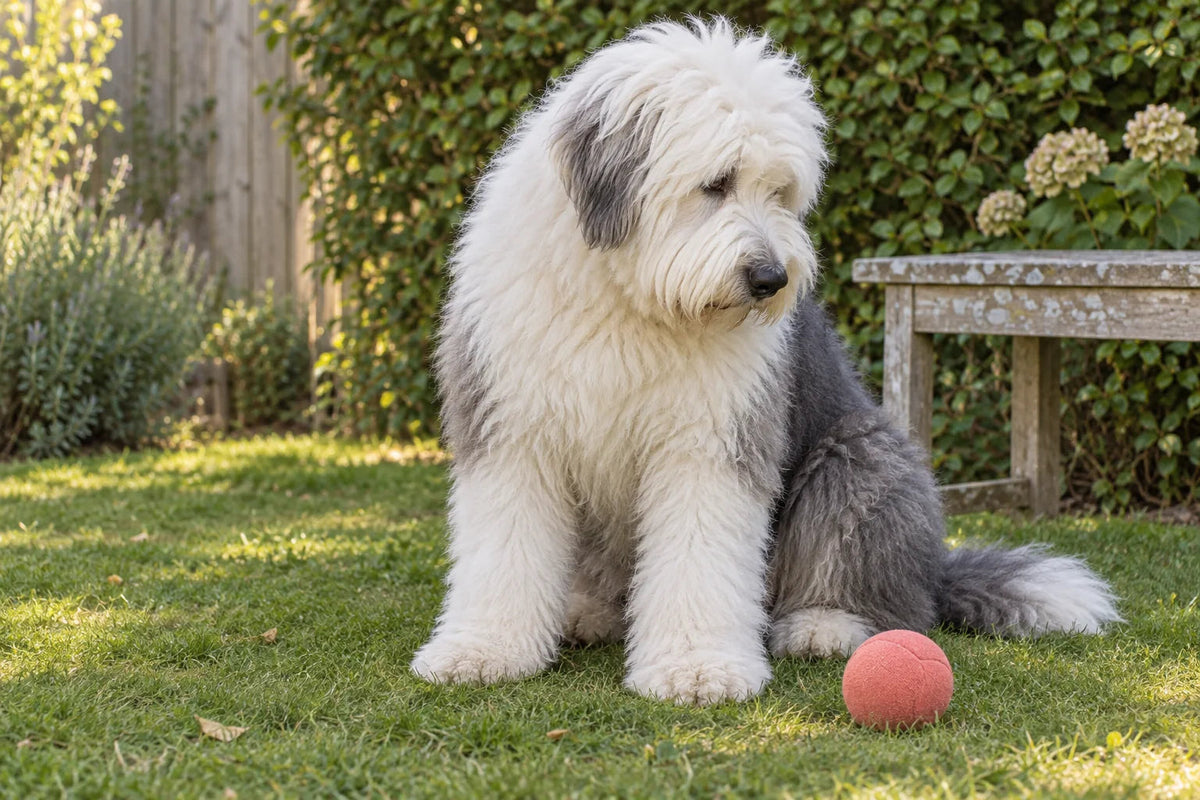
An Old English Sheepdog can look like one large, shaggy grooming job. Trying to handle it that way is often the problem. The coat is easier to maintain when you divide it into areas, check down through the layers and choose a length that fits the time available.
You do not need a full show coat to keep the breed’s character. A practical pet trim can leave the familiar shaggy outline while making ordinary walks, drying and home checks much easier.
Size changes the grooming plan. Allow time for the underside and both sides of the dog, provide a secure comfortable surface and do not let a tidy outer layer hide unchecked roots.
Understand the two layers
The AKC breed guidance describes a double coat needing thorough grooming and recognises shorter pet trims as an option. Those trims still require brushing between baths and haircuts.
The breed club’s account of the Old English Sheepdog distinguishes the soft undercoat from the harsher outer coat and discusses line brushing or a shorter pet coat. The practical point is that surface appearance cannot tell you whether the underlying hair is free of tangles.
Divide the work before starting
Think in areas: neck and shoulders, each side, chest and underside, each leg, hindquarters and head. A simple written checklist can help prevent the familiar pattern of brushing the back thoroughly and running out of patience before the difficult areas.
Choose a non-slip surface and a comfortable working position. If your dog calmly accepts lying on its side, that can improve access, but do not force the position. A large dog who cannot stand comfortably for a long session needs a different plan, not more pressure to finish quickly.
Ask your groomer to demonstrate safe access to the underside. Short, regular sessions on a coat that is already manageable are easier than attempting a lengthy brush-out after tangles have accumulated.
Check each layer, not just each area
- Part a narrow section and lift the hair above it.
- Use a suitable pin brush or slicker with light strokes through the exposed hair.
- Support a loose tangle near its base and ease the ends apart gently.
- Follow with a metal comb, using wider spacing before finer spacing.
- Move to the next layer only when the section separates comfortably.
Pay particular attention to armpits, harness contact, behind the ears and the inside of the hind legs. Do not keep scraping at one patch until it looks flat. A comb that catches is information: investigate what remains rather than increasing force.
Close or felted mats need professional assessment. Scissors beneath them can catch hidden skin, and pulling a comb through a solid layer is uncomfortable. Discuss shortening the coat if maintaining the present length is no longer realistic.
Keep the shaggy face practical
Hair does not need to cover the eyes to preserve the breed’s identity. Ask a groomer for a safe way to keep the eyes clear through appropriate trimming or hair management. Avoid improvised scissor work beside a moving face.
Check the beard after meals and drinks. Gently wipe ordinary residue, dry wet ends and separate manageable hair in small sections. Long wet facial hair can become an everyday burden even when the body trim is short, so include it in the haircut discussion.
A pet trim is a maintenance choice
Tell the groomer how your dog spends its days and how much coat care you can reliably provide. Ask about body length, leg hair, underside and head separately. Keeping generous leg furnishings may preserve a particular look but also preserve much of the brushing work.
Agree on the next appointment and review the plan if tangles return well before it. There is no benefit in repeatedly preserving a length that leaves the dog uncomfortable between visits. A practical trim can be attractive throughout the whole interval.
Allow enough time for drying
Before an ordinary bath, check the coat and gently clear loose tangles; have extensive matting assessed before wetting. Use dog shampoo as directed, rinse thoroughly and blot with towels. Do not scrub the hair into a tangled mass.
Drying a dense coat is a substantial part of the job. If using a dryer, introduce comfortable moving airflow gradually and check the roots, underside and legs. Do not judge completion by the outer white hair alone. Before clipping, the coat needs to be clean, fully dry and combable.
Our coat preparation guide explains the sequence. A professional bath and dry may be the practical choice if your equipment or available time cannot comfortably manage the whole coat.
Tools should support a realistic routine
The VUNRO combination comb helps check gently brushed sections; it should never be forced through felted hair. Owners trained in suitable pet body trimming can consider the VUNRO D-Series clipper with D-Series blades and an appropriate compatible attachment.
Do not underestimate the handling and preparation required for a large, dense coat. Keep difficult mats, close work and detailed shaping with an experienced groomer. Check nails and any dewclaws separately from the hair, and have safe nail care demonstrated if needed. A successful routine keeps the entire dog comfortable, including the parts you cannot see from across the room.
Keep learning
More from the Blade Blog
Whippet Grooming: Gentle Coat Care and Comfortable Nails
Read the guide →
Chihuahua Grooming: Smooth Coats, Long Coats and Tiny Paws
Read the guide →