

Dog Hair Dye: Welfare, Product Checks and Safer Decisions
Before considering creative colour, assess whether the dog should have it at all and what the specific product actually allows.
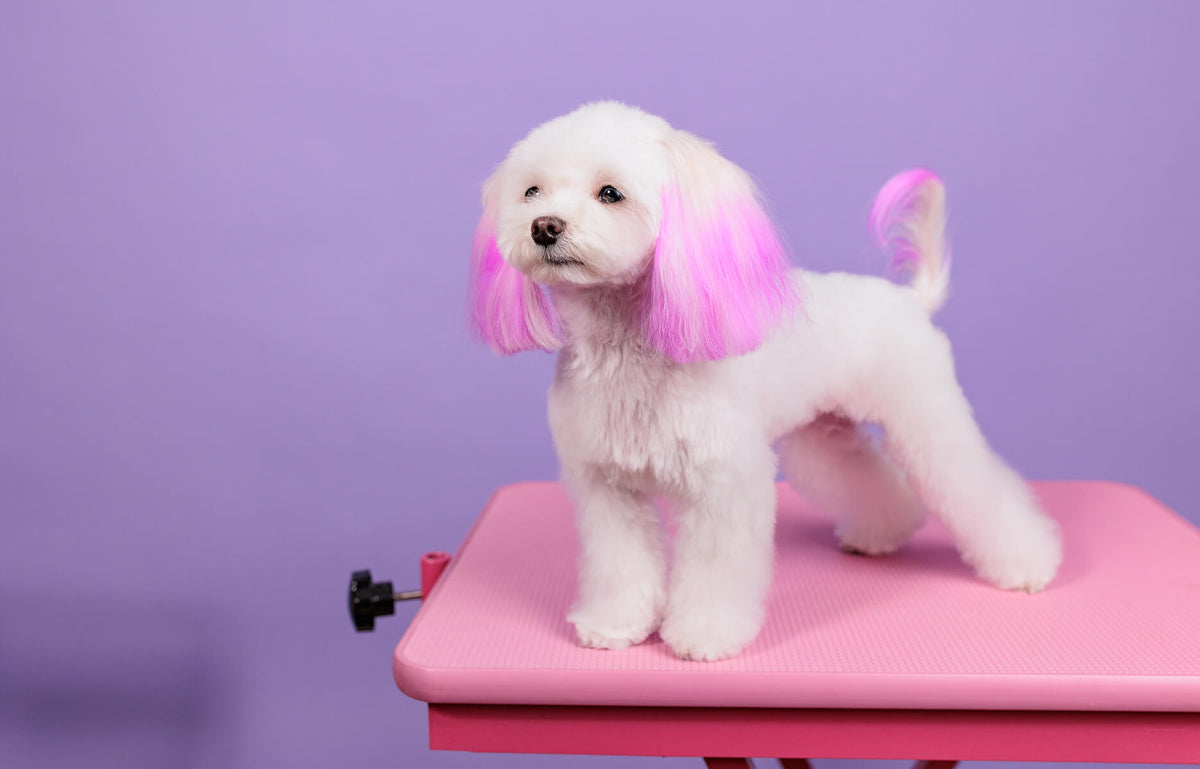
The practical answer
Colour is optional. If a dog has irritated skin, struggles with handling or cannot comfortably tolerate the extra process, skip it. Never use human hair dye or improvise a colouring recipe.
Decide whether colour belongs in this groom
A creative finish adds handling, product exposure, rinsing and drying. Start with the dog’s health, behaviour and usual tolerance rather than the photograph you want to create. A routine groom that already pushes the dog’s limits is not a good starting point for extra cosmetic work.
VCA’s guidance on specialty grooming notes the lack of evidence that human hair dye is safe on dogs. If colouring has caused eye irritation, skin damage or other symptoms, stop and contact your vet with the packaging.
Read the exact product directions
Products sold for animal colouring are not interchangeable. Check the exact product’s species and age restrictions, application directions, sensitivity-testing instructions and cautions before considering use. Ask your vet if your dog has sensitive skin or a skin condition. Instructions for one product do not establish that another is suitable.
- Confirm that the product is intended for dogs and for the proposed area.
- Check age limits, skin restrictions and required preliminary testing.
- Check whether coat preparation or other products affect its use.
- Understand contact time, rinsing and aftercare before opening the bottle.
- Do not mix colouring products or use bleach or a lightener as a home experiment.
Do not mistake “natural” for a safety assessment
Food colouring, plant products and household mixtures are not automatically suitable for a dog’s skin or for licking exposure. A patch test also does not guarantee that a dog will tolerate the whole process. If the directions are incomplete or you cannot verify what the product is, choose a different plan.
Keep the welfare decision simple
| Situation | Decision |
|---|---|
| Active itching, sore skin or recent skin treatment | Discuss with the vet and postpone cosmetic colouring. |
| The dog struggles with routine handling | Work on comfortable grooming first. |
| Unclear ingredients or instructions | Do not apply the product. |
| The planned result requires prolonged or repeated processing | Reconsider whether the cosmetic benefit justifies the extra burden. |
| Redness, discomfort or unexpected reaction | Stop and follow product safety directions; obtain veterinary advice promptly. |
Use an experienced professional
Ask how the groomer assesses suitability, documents the product and manages an adverse reaction. Agree a small, realistic design and a clear stop point. Keep the packaging and product details available if veterinary advice becomes necessary.
Choose a simpler way to mark the occasion
A comfortable, supervised photograph with an appropriate accessory may achieve the celebratory look without dye. Make sure any accessory is suitably fitted and remove it if the dog chews it or seems uncomfortable. The best creative choice is the one the dog can comfortably live with, including the process needed to achieve it.
Read next
- Understanding Dog Behaviour During Grooming
- Sensitive Skin or Something More? Grooming Clues to Record
Sources and further reading
VCA discusses the risks and uncertain safety of cosmetic colouring. This article is a decision guide, not a colouring procedure or an endorsement of a dye.
Keep learning
More from the Blade Blog

Two Dogs, One Grooming Kit: Keep Their Care Separate
Read the guide →
Between Grooms: Choose One Small Job, Not a Whole Haircut
Read the guide →


